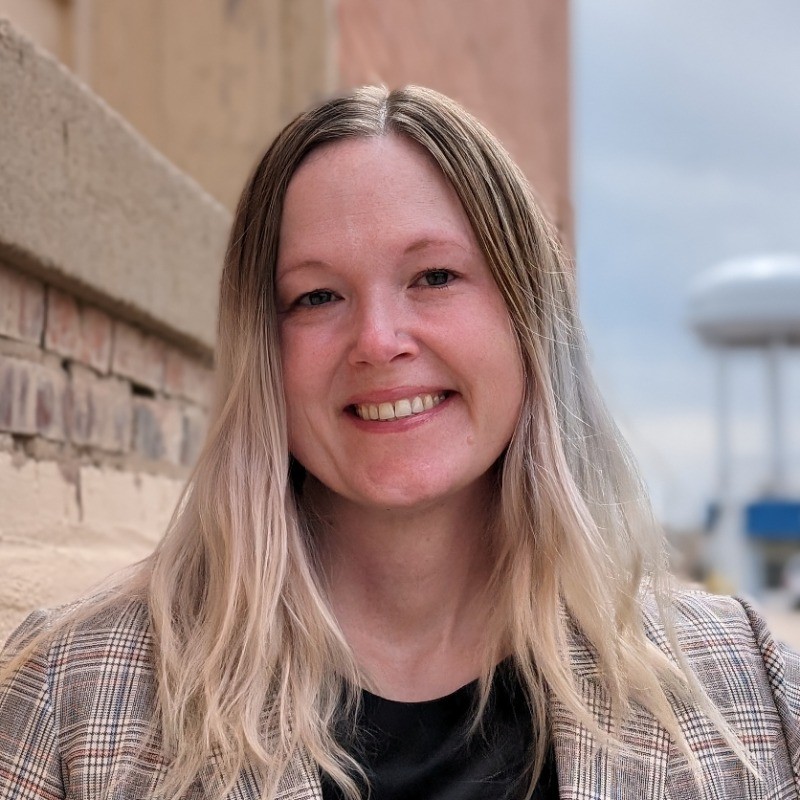
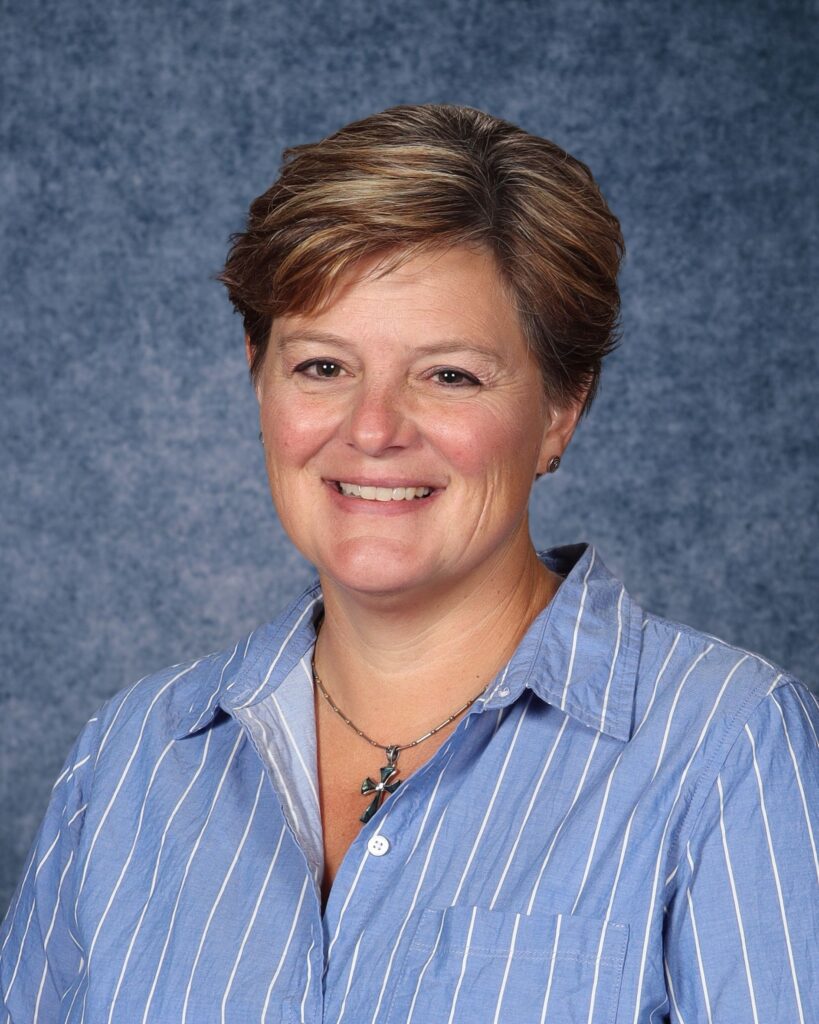
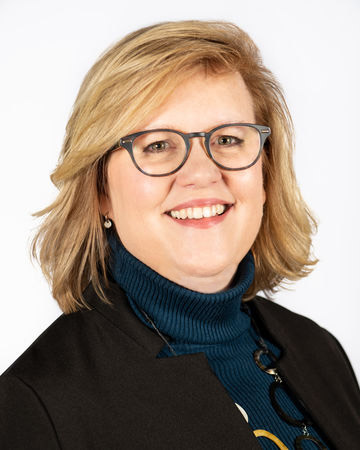
Lorinda Rice
- Describe your background and career – where did you go to college, what degrees, and what career roles?
I grew up in Ainsworth, Nebraska. My father owned a small community business, KBRB Radio. My first jobs were cleaning and helping the administrative assistant with stuffing envelopes for mailings. Later, my role changed to evening and weekend broadcaster and Deejay. While working with the team of dedicated people, I was able to see the importance of community and collaboration. This job was truly a service-oriented job – we were there to serve the surrounding communities.
When I visited colleges, I looked at both the Broadcasting and Visual Art Departments. I was torn on which path to follow – going into the family business or following my artistic talent. Art won out. I received my Bachelor of Fine Arts and an MS Ed degree from Northwest Missouri State University. The goal after graduating from high school was to become a graphic designer. That dream lasted a short time with a job at Bailey Lauerman & Associates, until I was contacted by a school district near my hometown; they needed an art teacher. So, I went back to my alma mater and worked toward a teaching certificate. After 16 years in the classroom (mostly elementary and a couple of years in high school), I decided to throw my hat in the ring for the Curriculum Specialist position and pursued an Administration degree. Serving as a teacher in multiple buildings allowed me the opportunity to learn from a multitude of leaders and I had a desire to see if I could make a difference like my mentors had. Being a curriculum leader has been a challenging and rewarding career. I love supporting teachers in knowing about updated arts education ideas and working alongside them in our pursuit to create meaningful art experiences for students.
- Describe a meaningful moment from your career in visual arts education.
There are so many meaningful experiences, it’s hard to choose just one. However, one that I hold especially dear is the work we did at Beattie Elementary, where a collaboration among many stakeholders led to the creation of an outdoor learning space that integrated multiple areas of the curriculum. In this space, we partnered with UNL students to create sculptures that encouraged students to see how working across generations helps communities thrive.
One guiding inspiration for this project was the Bhutanese folktale “The Four Harmonious Friends,” which illustrates the importance of interdependence and working together. Our outdoor space embodied that spirit—it became a place where community members contributed their time and knowledge, helping students understand where food comes from and the essential role insects play in our ecosystem. That folktale continues to influence my leadership today, reminding me to learn from those who came before, to listen to diverse perspectives, and to find ways forward together.
- What type of arts do you like to be involved in or arts events you continue to support?
I have diverse interests when it comes to the arts. I enjoy attending musicals, theater productions, concerts, and poetry readings. I also love visiting gallery openings and supporting artists who use their work to advocate for meaningful causes, such as conservation. I believe the arts have a unique ability to express, connect, and inspire—they reach into our souls and often reflect deeply personal experiences.
- You have been active with state and national leadership in the arts. Would you share an experience you have had where you have witnessed meaningful change through your advocacy work?
Being part of a larger organization has helped me realize that art education is about much more than developing skills or creating beautiful end products. I’ve had the privilege of working alongside a variety of leaders who truly understand the value the arts bring to our world. They’ve inspired me to believe that all students are capable of deep thinking and, with the right guidance, can make meaningful decisions about what to create, how to create it, and why their work matters. These mentors also encouraged me to recognize my own potential in this field. At times when my motivation began to wane, they became my cheering section—helping me focus on the bright spots and reminding me that lasting growth often comes from small, incremental changes. Through my mentors, Julia Marshall, Ellen Winner, Marilyn StewartJean Detlefsen I can say that I have seen the work of Art-based Inquiry grow in art teachers. My best moments are walking into art classrooms that are alive with creativity, with students who are so excited about their work they want to tell you all about the process and what they hope to achieve in the final product–that is true learning and artistic expression. I think of the book by Rick Rubin when I see students thriving in the art room. The essence of his book is that creativity is a way of being, not just doing, and that inspiration comes from inside and outside oneself–it is the act of creating. That is what we want in this ever-changing world — people who will know how to learn, unlearn and relearn.